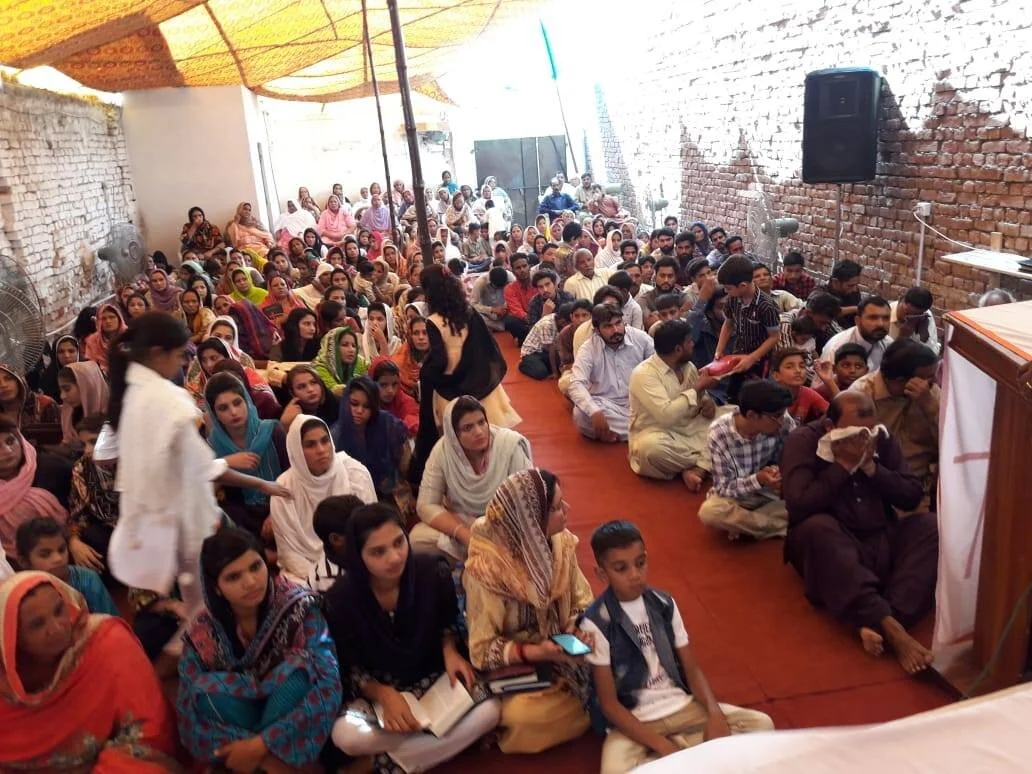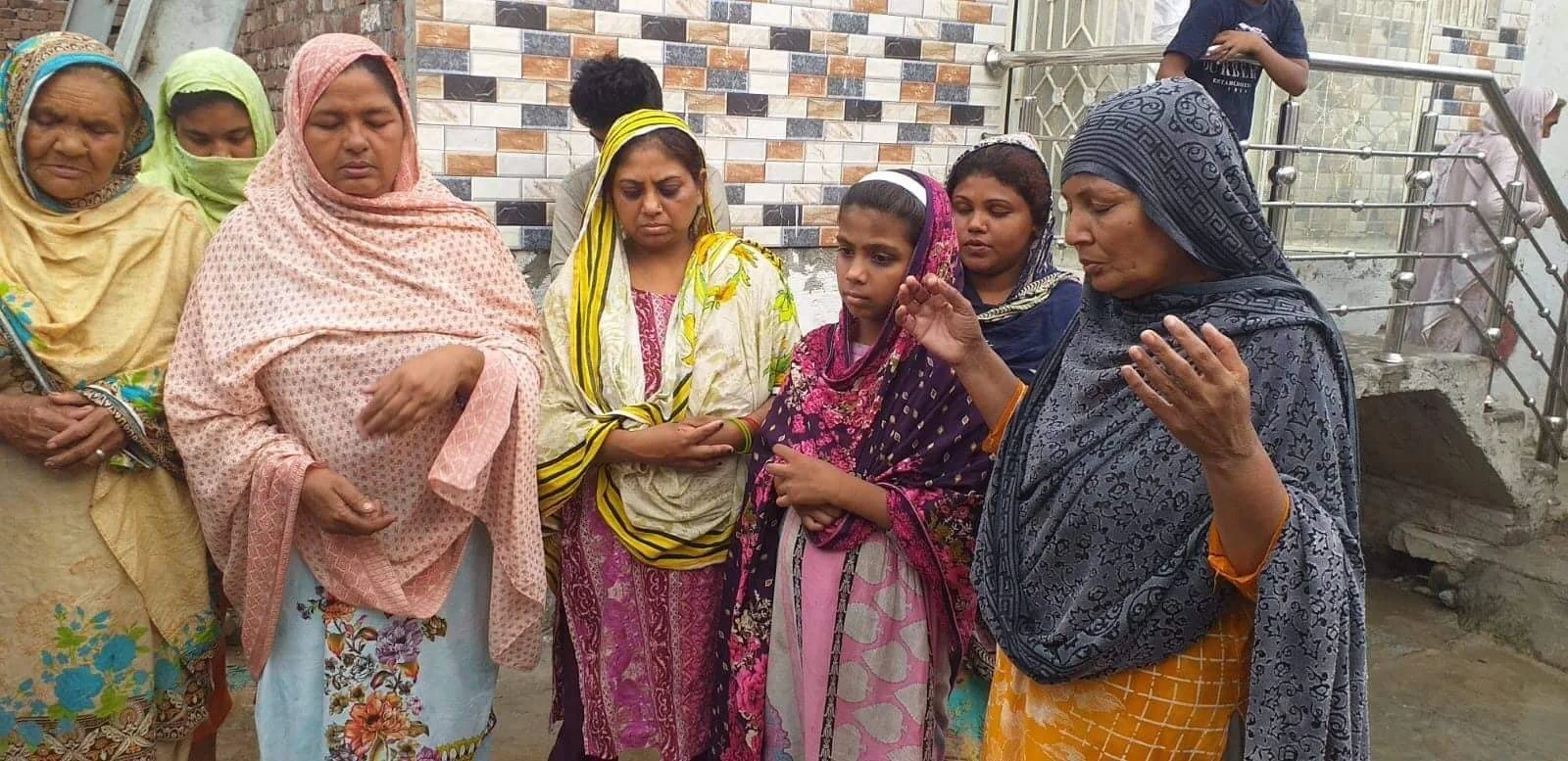
The Church in Pakistan
The Christian Population in Pakistan is estimated at 1.6% or just about 340,000, half of which are Protestant and half Catholic. Gospel Hill has an eight-year ongoing ministry support relationship with Pastor Pervaiz Mehran and his family in Sialkot and a Gospel Family in Fasilabad. Please consider supporting this work. The Gospel of Jesus Christ is our best export, to the Shenandoah Valley, Virginia, the United States and the World.

The compelling part about Pakistan is - with no exaggeration - the incredible, unbelievable, supernatural nature, in which this ministry came about.
It's the story of Nazir, this man who was a slave and wanted be free.
- Mike Adams
-
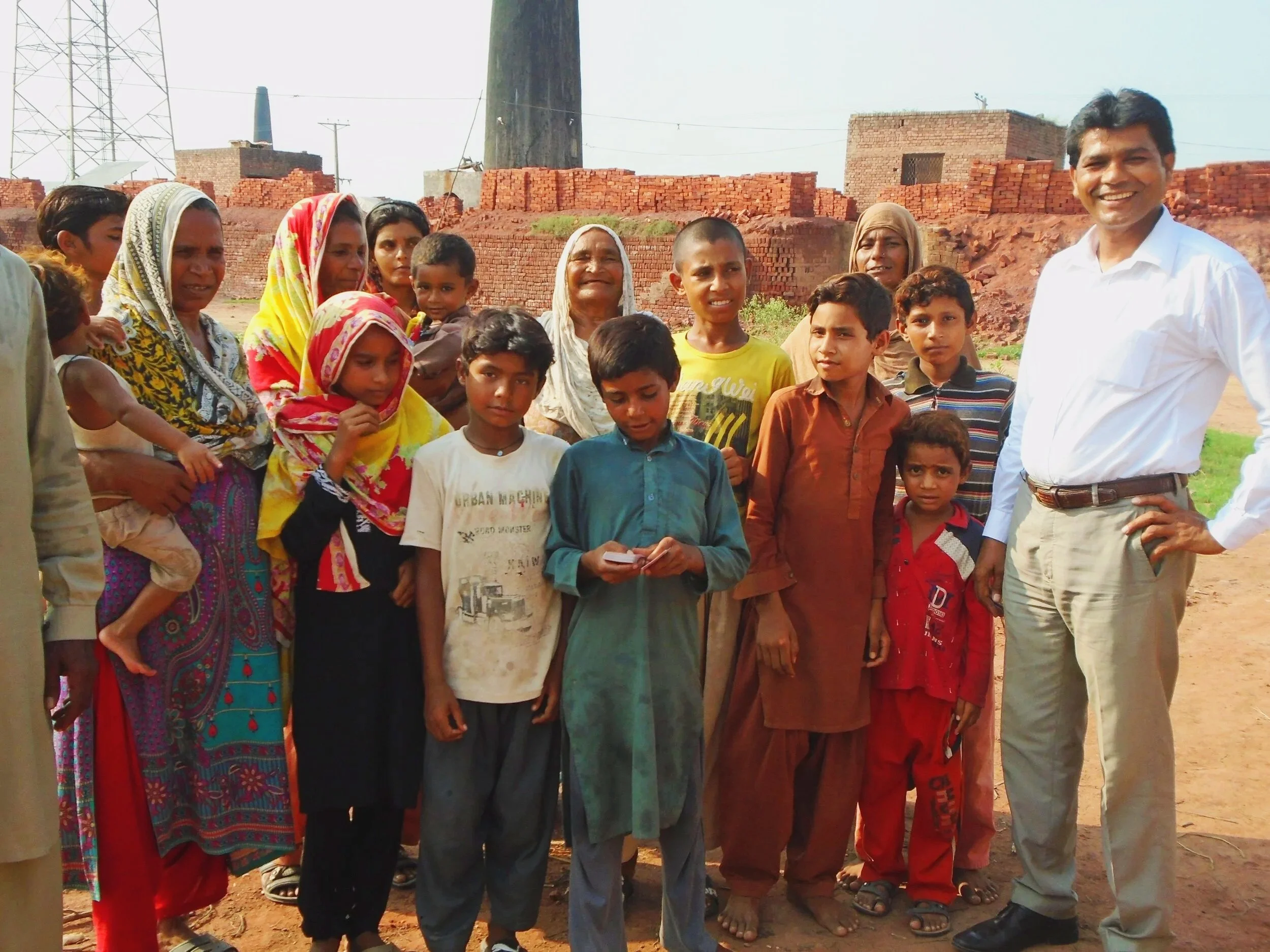
There are over 20,000 brick kilns in Pakistan, places where thousands live out their lives in the shadow of generational slavery. Because the Christian minority there—less than 1% of the population—is treated with such disregard, they are often forced into these "bond-slave" arrangements. They cannot read or write, so they never truly know their debt, their wages, or their future. They are trapped in a cycle of desperation, working for pennies to feed their families, effectively owned by the kiln masters.
I work with a faithful husband-and-wife team in Pakistan—my "Gospel family." They serve God with everything they have, despite living in deplorable conditions. They conduct outreaches to these kilns, bringing food and holding nights of worship to bring a moment of light into the darkness.
It was during one of these nights that they met Nazir.
Nazir was an older man, broken down by years of labor. He had a Bible he held close, though he could not read a word of it. He approached my team with a desperate hope: "My father left me a building. If you would rent it from me, perhaps I could finally pay off my debt and be free."
They sent me pictures of this "building." It was barely fifteen by fifteen feet, a ruin of three broken walls, no electricity, and absolute desolation. My first instinct was to say no; it was unusable, a wreck. But as I looked at the photos, a thought stopped me. I told my friends, "Maybe if we put this in God’s hands, He could do something with it."
When they told Nazir this, he didn't hesitate. He chose to give the building to God.
I sat with that decision for a long time. I thought about a man who had nothing but a broken building and a broken life, yet was willing to surrender his only asset to a God he couldn't even read about. I felt a profound, tender conviction. One night, while reading about the "Nazarite" vow—the vow of the set-apart, the consecrated one—the name hit me: Nazir. In that moment, I heard a whisper from God, and I knew: I couldn't say no to this faith.
I began sending $50 extra with every support check, telling no one what to do with it. To my astonishment, Nazir wasn't buying food or comfort; he was applying every cent directly to his debt. He was fighting for his freedom.
I realized then that we needed a roadmap, so I sought the Lord. He led me to 2 Kings 12—the story of King Joash repairing the temple. The command was to find the dilapidation and fix it, and the workers were so faithful that they didn't even need an accounting.
That became my prophecy. I felt God saying, "I have heard the cry of my people in Pakistan, just as I heard the lad in the desert." I knew what I had to do: we would build seven buildings in seven cities.
We started with Nazir’s lot. We tore down the ruins and built a structure that defied all logic. As we worked, the "accountability" issue vanished—the local workers were so faithful that the project flowed like water. It was a witness to the entire village. People were moved by the story of a slave longing for freedom, and soon, a three-story "House of Prayer" stood where a ruin used to be.
But the final act was the most miraculous. Nazir still owed about $1,008. I had the money raised, but before I sent it, God gave me a strange instruction: Go to the Muslim kiln owner, Mr. Hassan. Ask him as an act of mercy before the God of Abraham to release him.
My team approached Mr. Hassan—a towering, intimidating man. He paused, and then said something that could only have been divinely planted: "I cannot let him go, but perhaps I could release him for less than is owed—on two conditions: you tell no one in my family, and you tell none of the other servants."
The debt was cut in half. We paid the remainder, and that night, the village saw something they had never seen before: one of their own, finally walking free.
Nazir rode out of that kiln on the back of a motorcycle, a man set apart. We had built a "prophet’s room" at the top of our new building for him, a place of rest. But when we showed it to him, he shook his head. "I cannot stay," he told us. "My son, Adna, is still a slave in another kiln. I must go work alongside him to double down on his debt, so he, too, may be freed."
He understood it perfectly: free people free people. We are not of the bond; we are of the free. And that was the beginning of our work—a legacy of freedom, built one brick at a time.

Donate to Support Our Ministry Work
Through the Eyes of Our Brothers and Sisters In Christ Oversees